Conservation Commission Past Events
Presentation by Matt Tarr, Wildlife Habitat Specialist / UNH Cooperative Extension
In the 2nd part of this summer’s Conservation Commission series on Forest Health, Matt Tarr, UNH Professor and Wildlife Habitat Specialist with the UNH Extension Service addressed the complexities of invasives in the habitat ecosystem.
He spoke to the impact of invasives on insects, birds, mammals, reptiles and amphibians. The purpose of his presentation was to help us understand how invasive plants function as habitat for wildlife, and how to make good decisions in determining whether the removal of invasives would help or hinder habitat needs of wildlife.
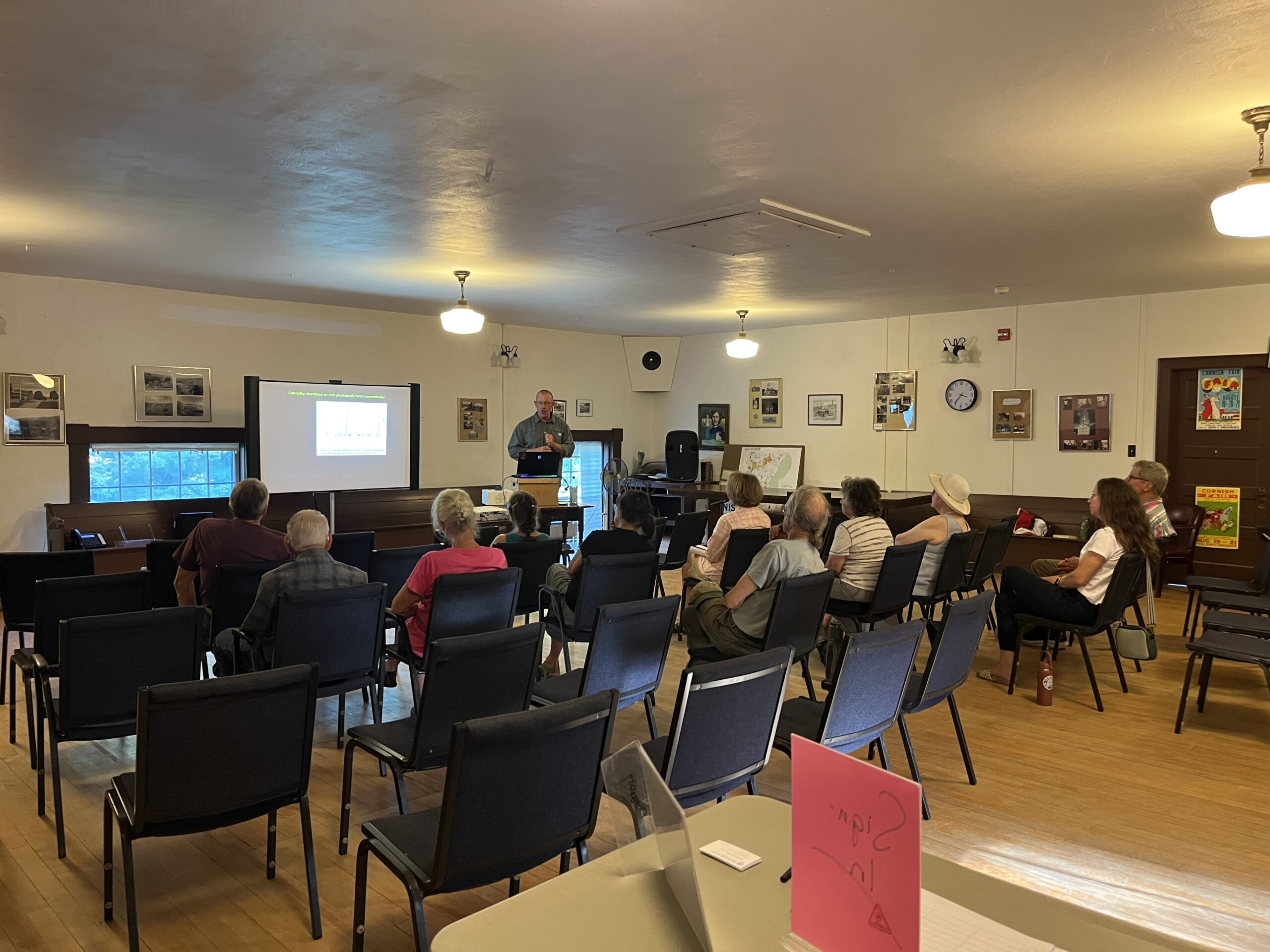
Based on his own research, he countered two myths related to invasives and birds Invasive fruits are less nutritional and invasive fruits produce chemicals that make birds sick, neither is true. He also shared that bird diversity in the landscape is greatest when there is a mix of native and non-native species; but if the invasive plant presence is 55% or greater, bird species diversity will be reduced.
All plants have wildlife habitat value, including invasives. Some invasives provide comparable or better habitat than native plants, and removing them can reduce habitat quality for wildlife. Therefore the goal is to encourage and maintain diverse plant communities dominated by native plants when possible.
Invasive species are not invasive everywhere. When a plant becomes invasive it’s almost always a symptom that natural growing conditions have been altered by soil disturbance, excess nutrients and selective browsing. For example historic livestock grazing impacted the soil quality “forever” in New England. Deer and beaver are selective browsers and prefer native plants over invasives. These situations give the invasives a strong foothold in replacing native vegetation. In some landscapes invasive plants may be the only plant that CAN grow or thrive due to disruption of growing conditions for natives.
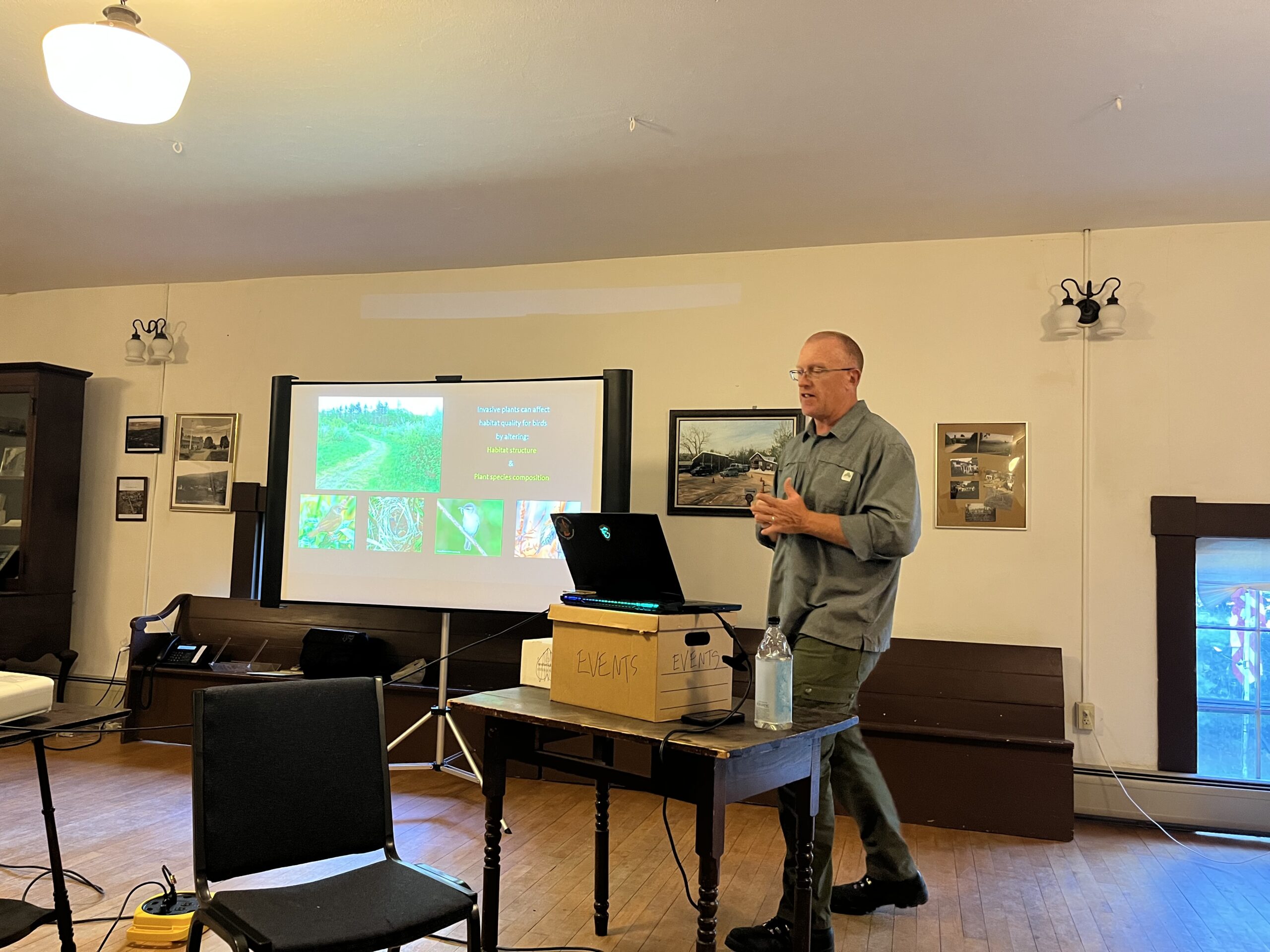
We need to choose invasive plant battles carefully and understand how invasive plants are functioning as habitat before we remove them in an effort to re-establish native species. Ideally we want plant communities to be dominated by native plants.
If you were unable to attend Matt’s talk or would like a review, CLICK HERE.
And if you have questions or concerns about invasives you can reach him at matt.tarr@unh.edu. Cooperative Extension services are free.
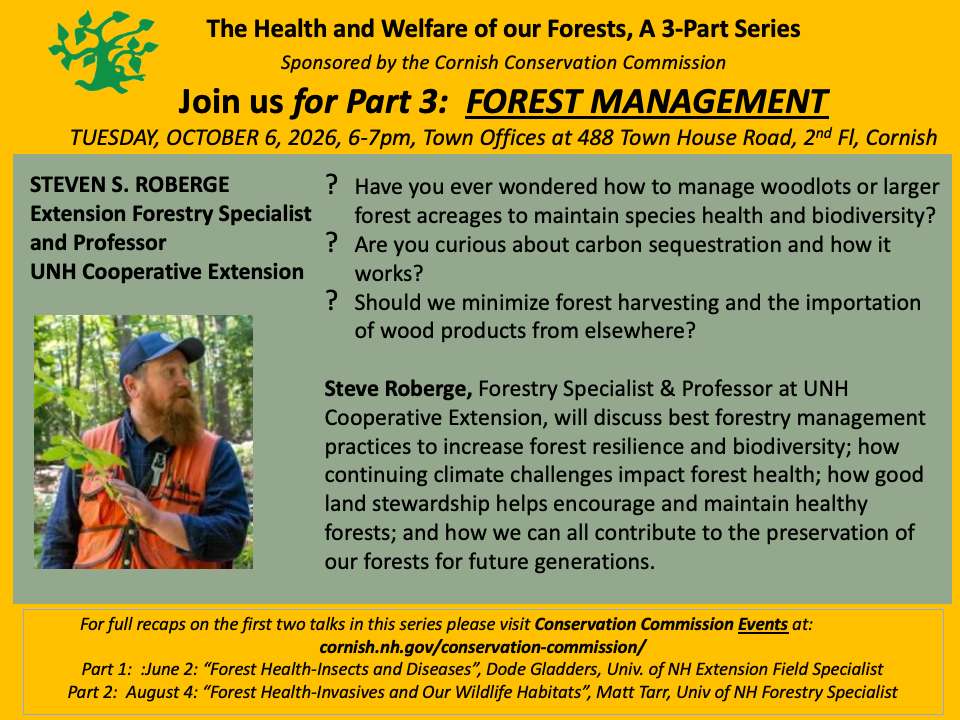
The next in our series on Forest Health will be Tuesday, October 6, 2026, Town Offices, 6-7pm. Steven Roberge, also of UNH Extension Service will offer a program on Forest Management practices. Click here for your invitation!