Wildlife Tracking and Habitat Walk (February 22, 2026)

Conservation Commission Past Events

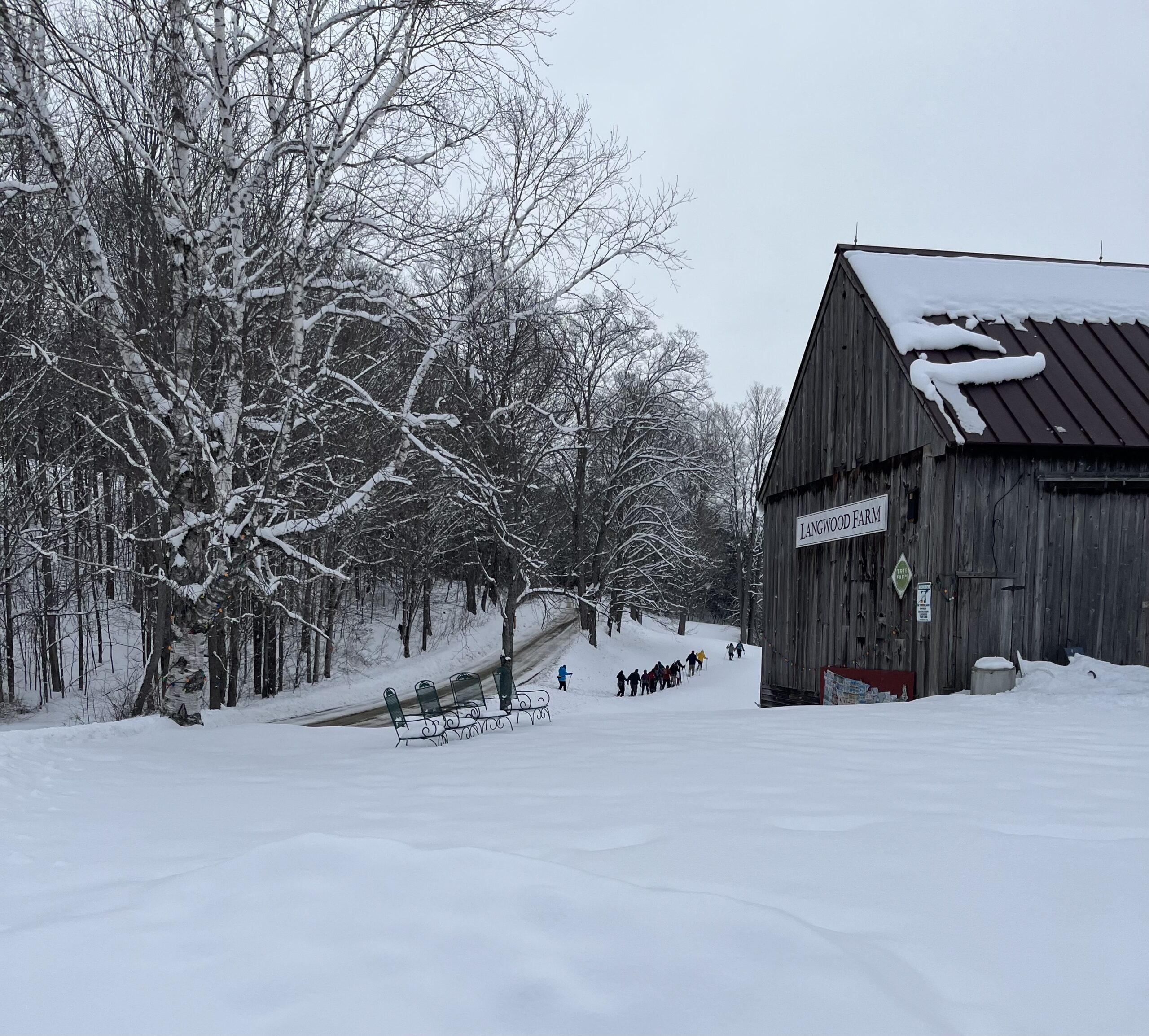
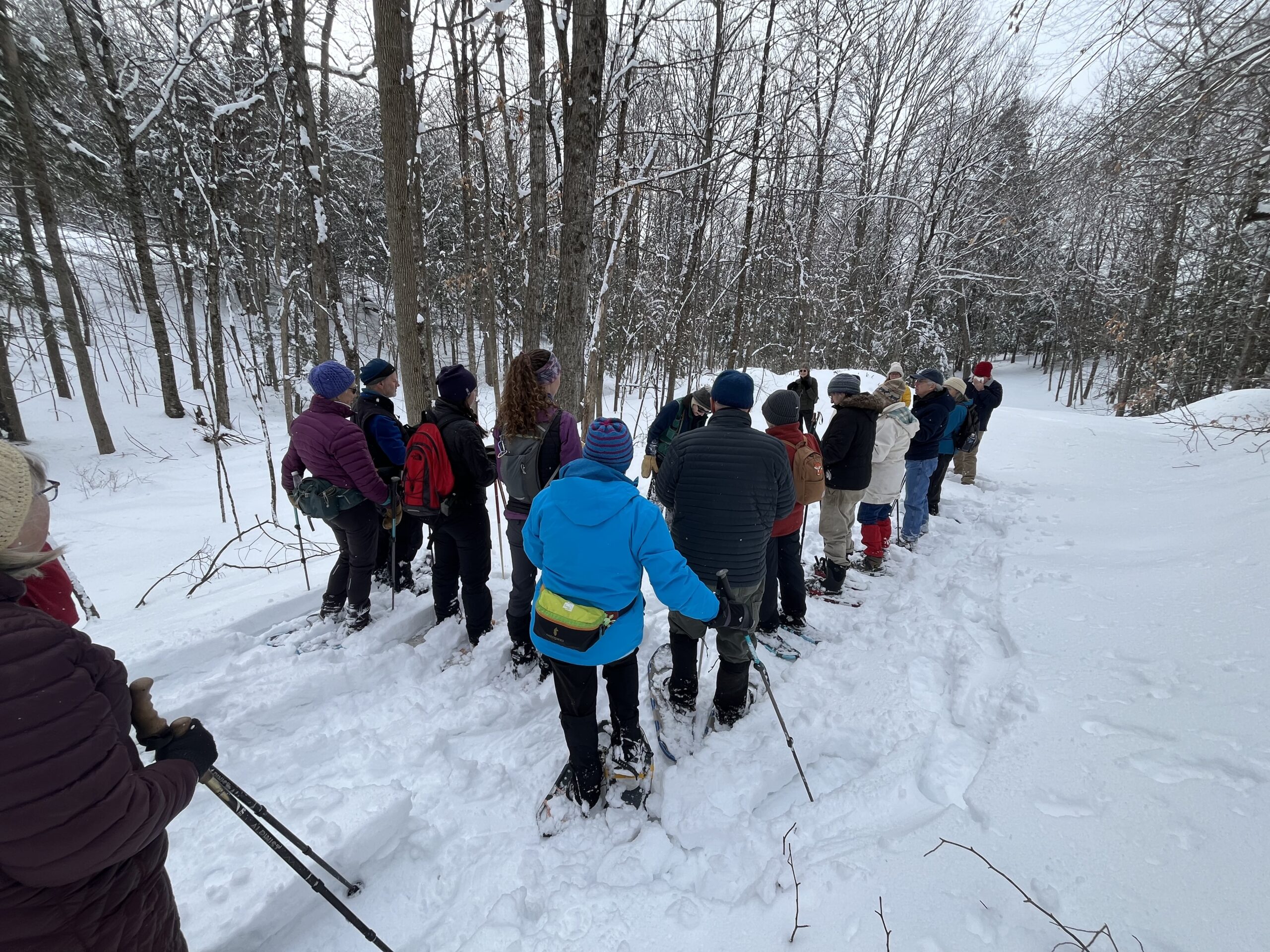
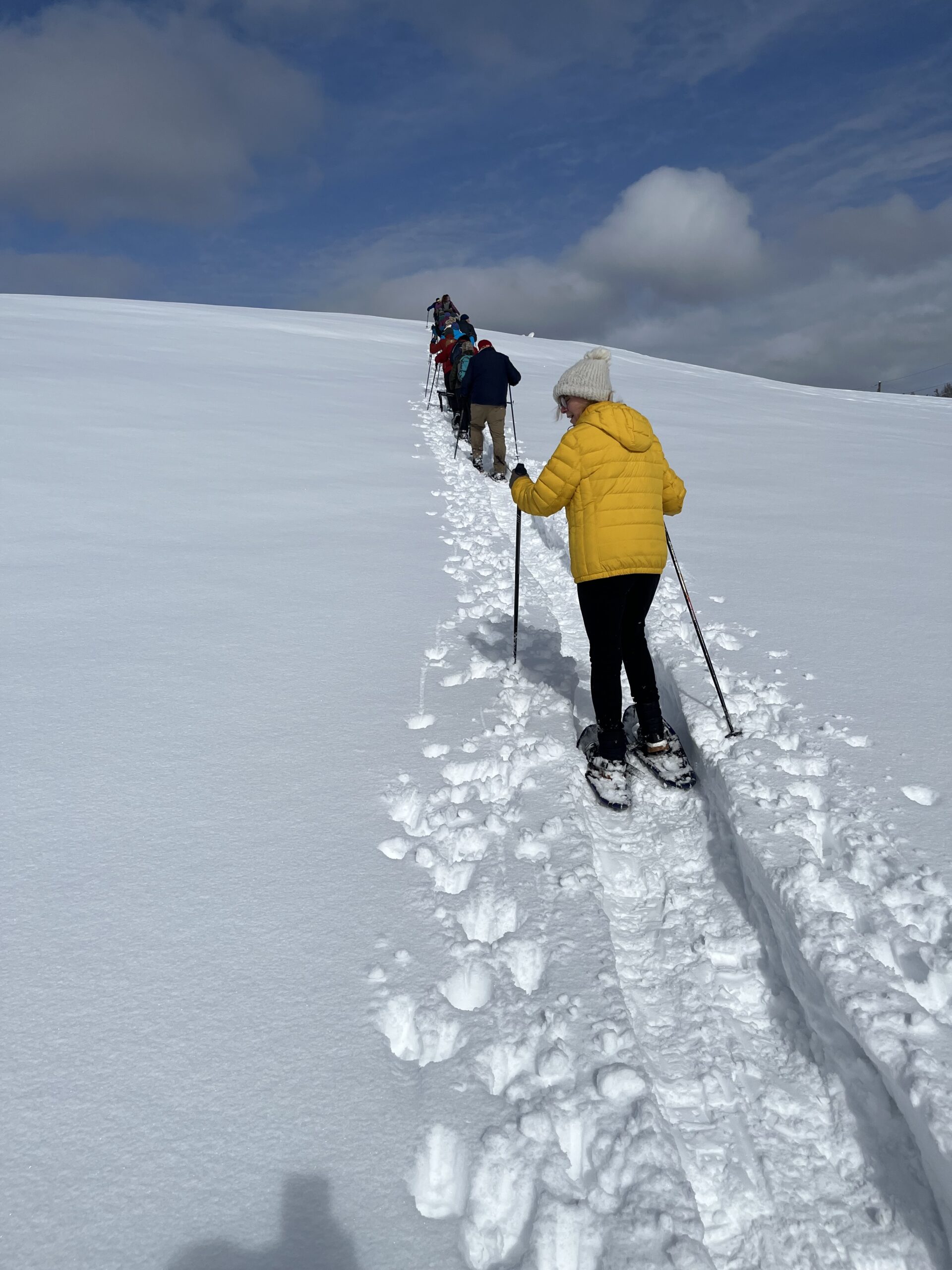
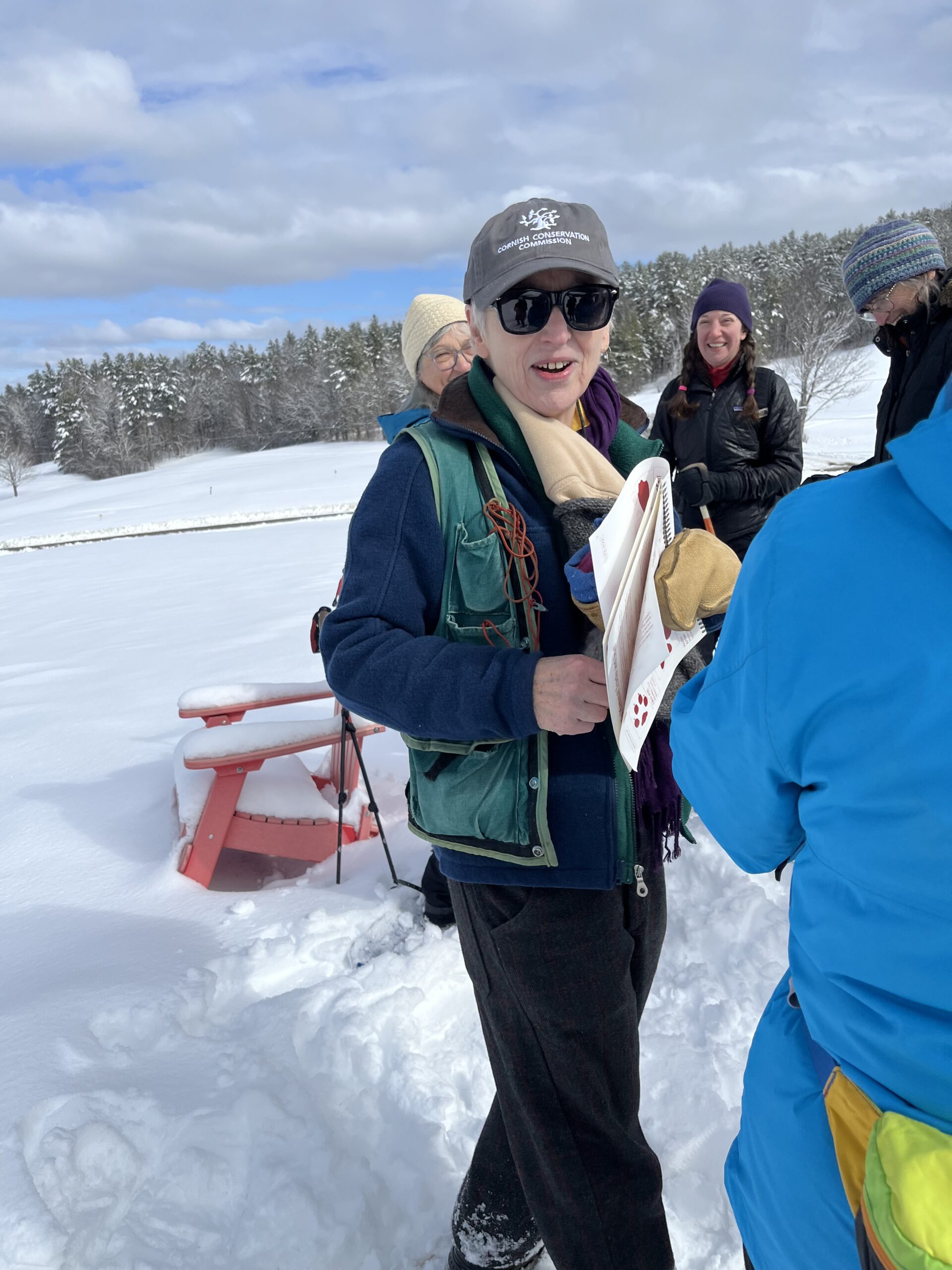
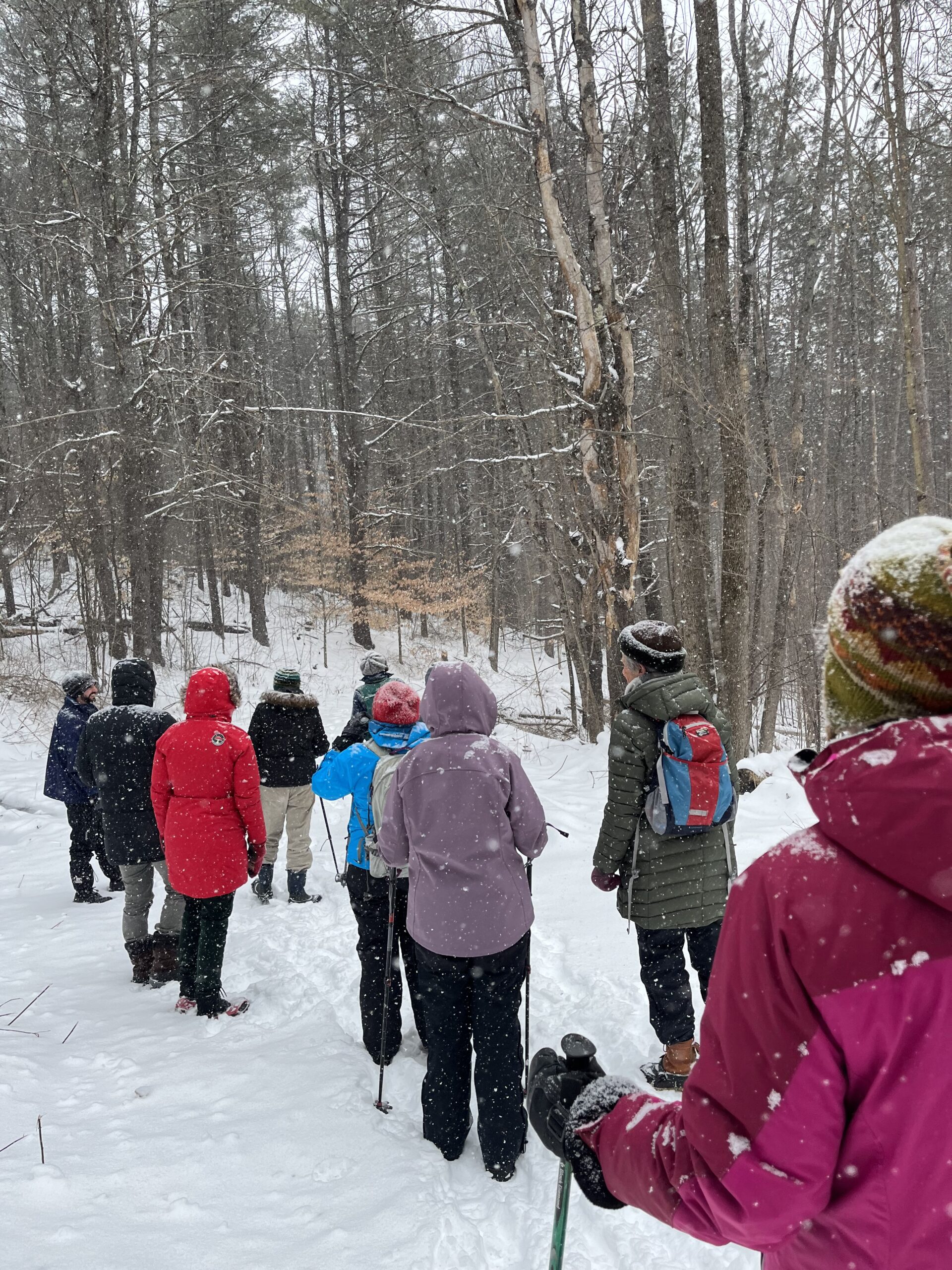
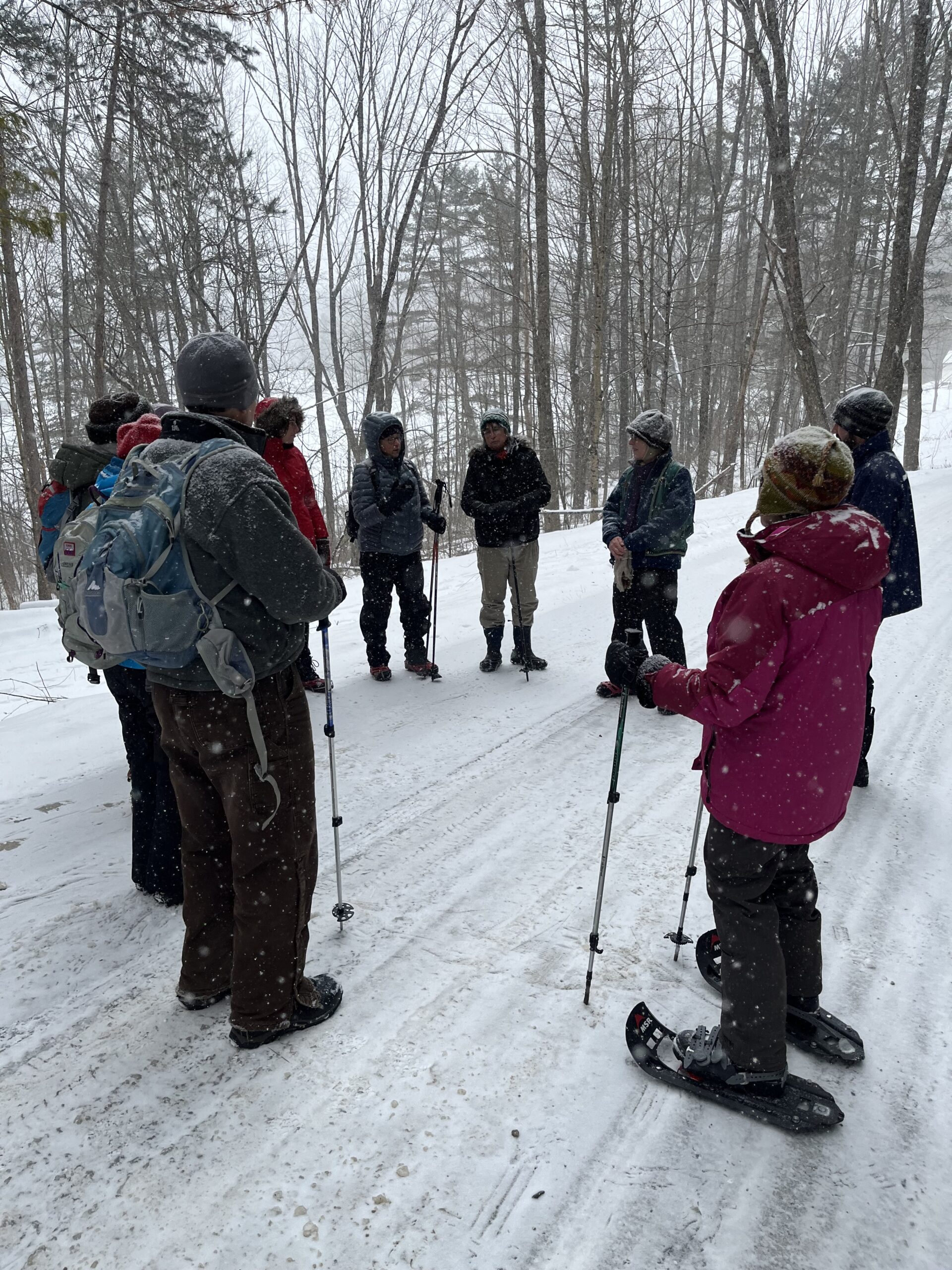
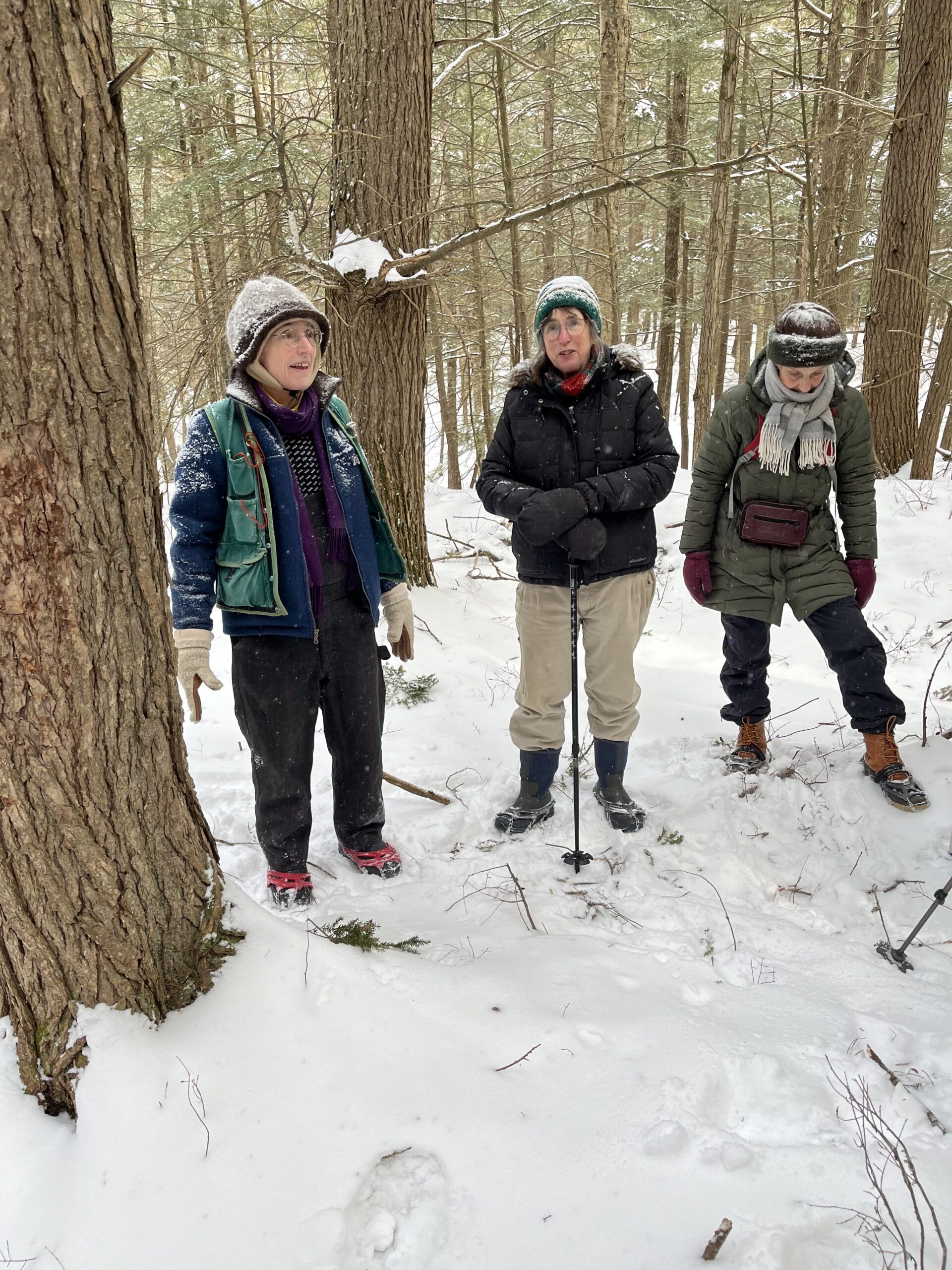
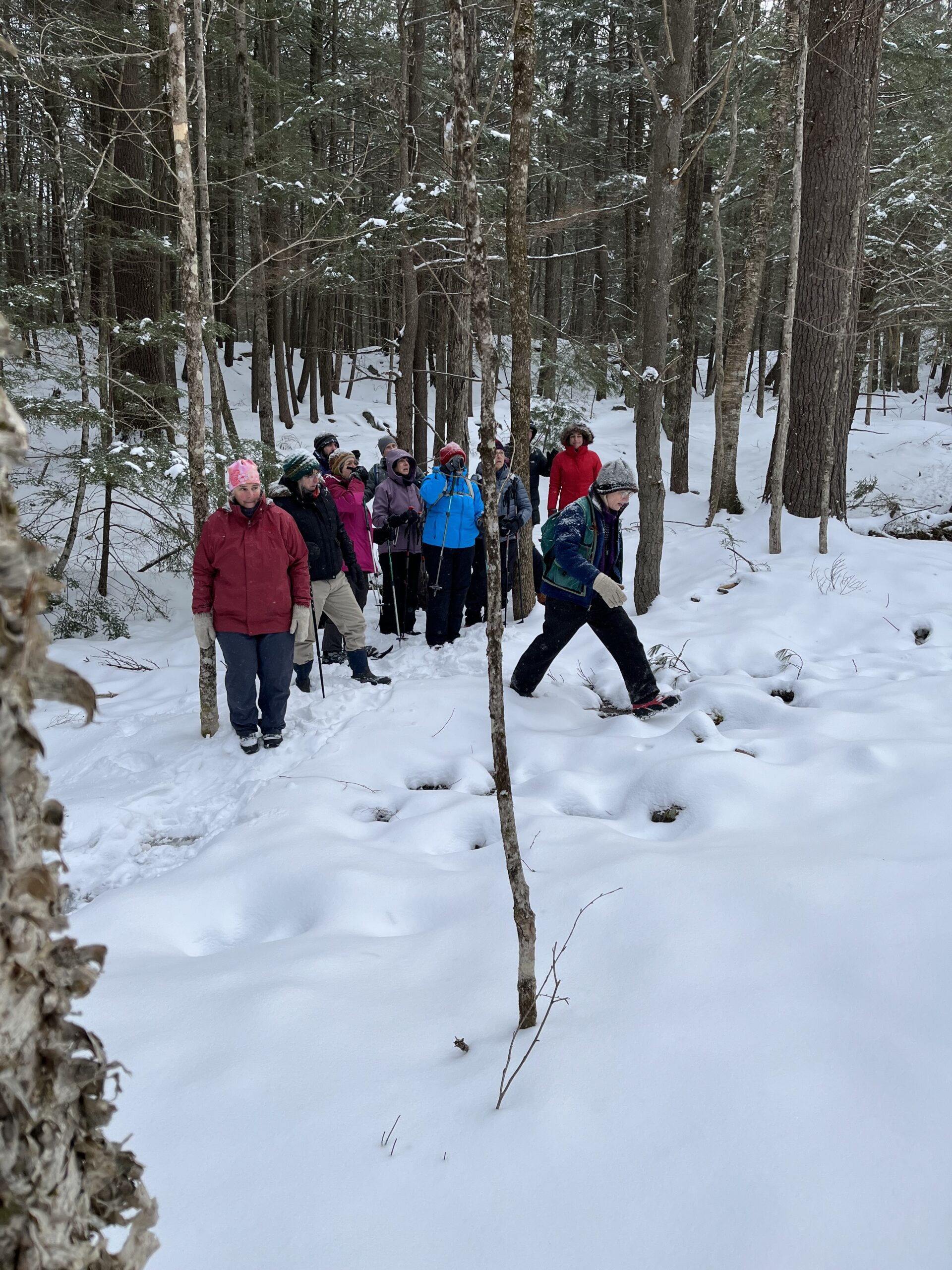
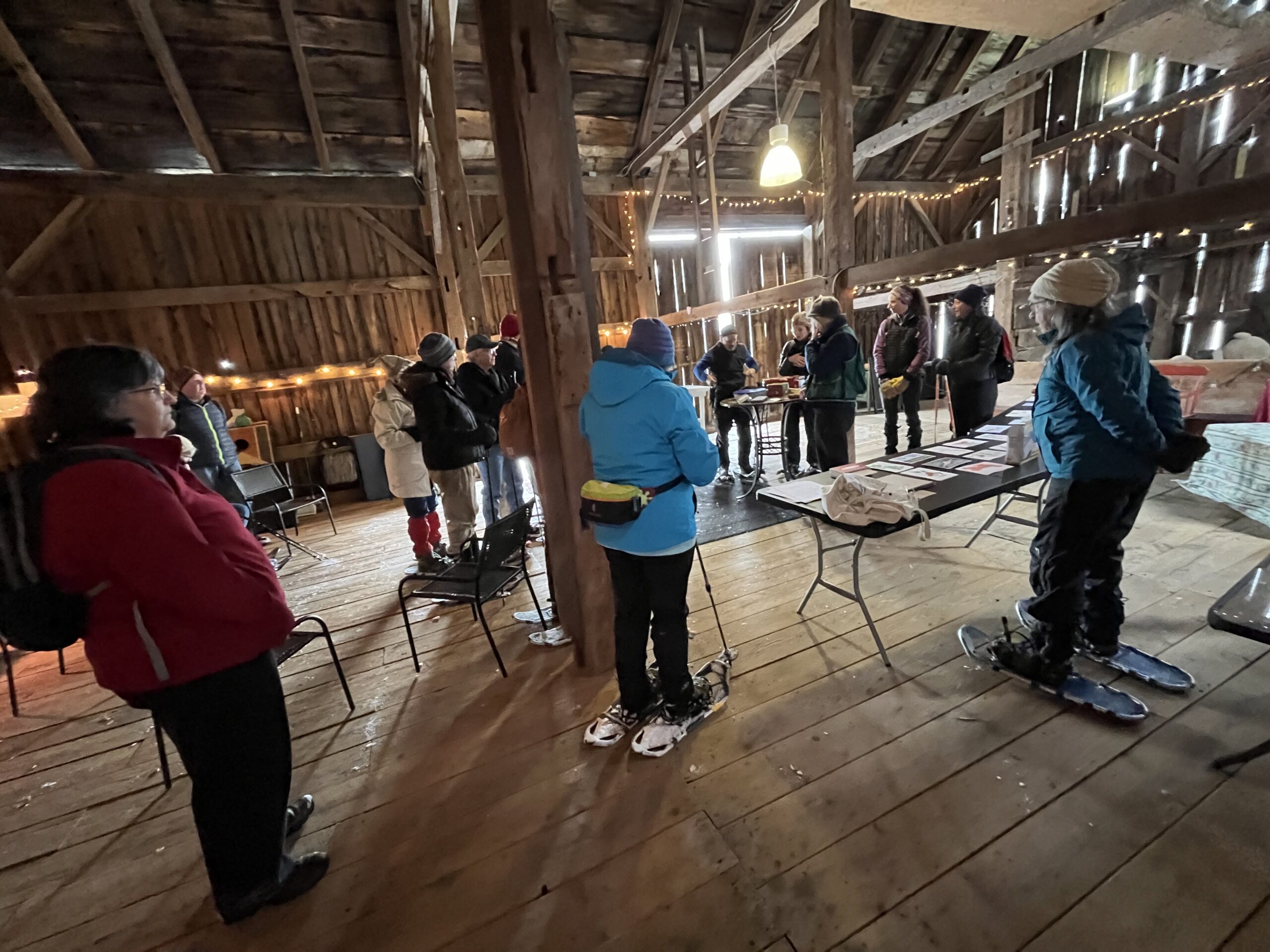
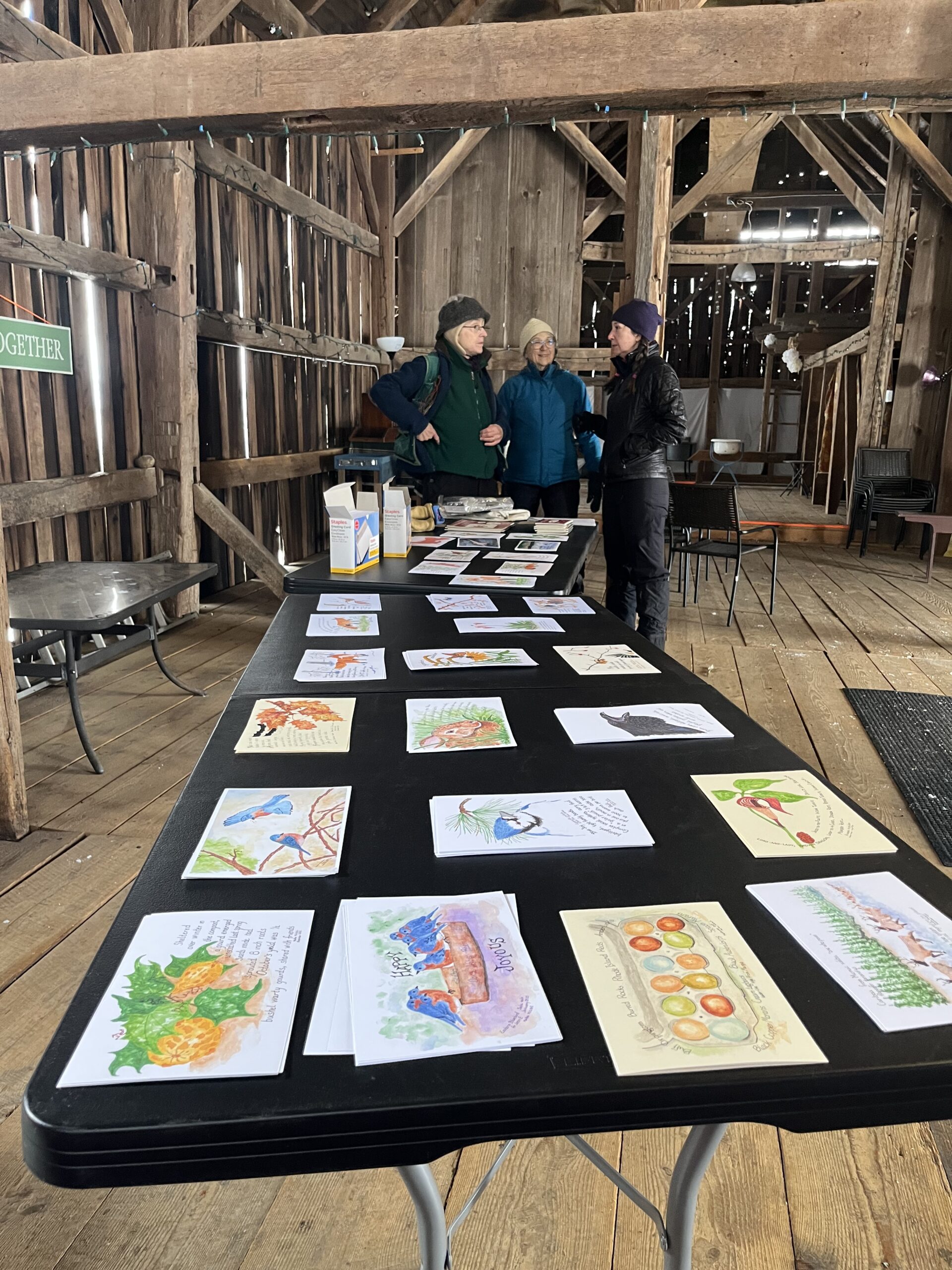
Deep snow, beautiful woods and fields, overcast skies that eventually offered sun and white clouds framed the CCC’s Sunday winter tracking event at Langwood Tree Farm on Feb 22, 2026. Twenty folks from Cornish and Plainfield enjoyed each other’s company as they followed naturalist and tracker, Martha Mitchell from Westminster West, VT for a 2-hour snowshoe, exploring tracks and signs of winter life. Afterwards the group gathered in Colleen’s  barn for more conversation and a chance to ask questions.

We learned that many animals do not move much in deep snow; it takes too much energy and increases the risk of predation. Also, the ability to determine with certainty what type of animal made a track when the snow is so deep is nearly impossible. The best tracking is done in mud or very light snow when prints are very easy to see. That said, we were able to determine that deer were prevalent (from tracks and evidence of browsing on shrubs), gray squirrel efforts to retrieve buried acorns were also clear, and a fallen tree over a stone wall created a protected area which showed signs of porcupine activity. Once the group reached the hilltop behind the barn we were treated to the sight of 4 crows mobbing a red-tailed hawk in the sky overhead. Quite a dramatic conclusion to our snowshoe adventure!

Martha stopped us from time to time to talk about woodland invasives, insects, fungi and diseases affecting our trees and all of the life forms that depend on them.  We shoed across wetlands with running water and Martha pointed out prints leading to ferns (food for turkeys) and red dogwoods which deer browse –  she inspired an active dialogue with the group, and all of us learned something new.

Thanks to Martha Mitchell, all those who ventured out to explore and learn more about Cornish winter woods, and to Colleen for welcoming us so warmly to Langwood Farm.
What’s in Your Water? (April 27, 2023)

Conservation Commission Past Events

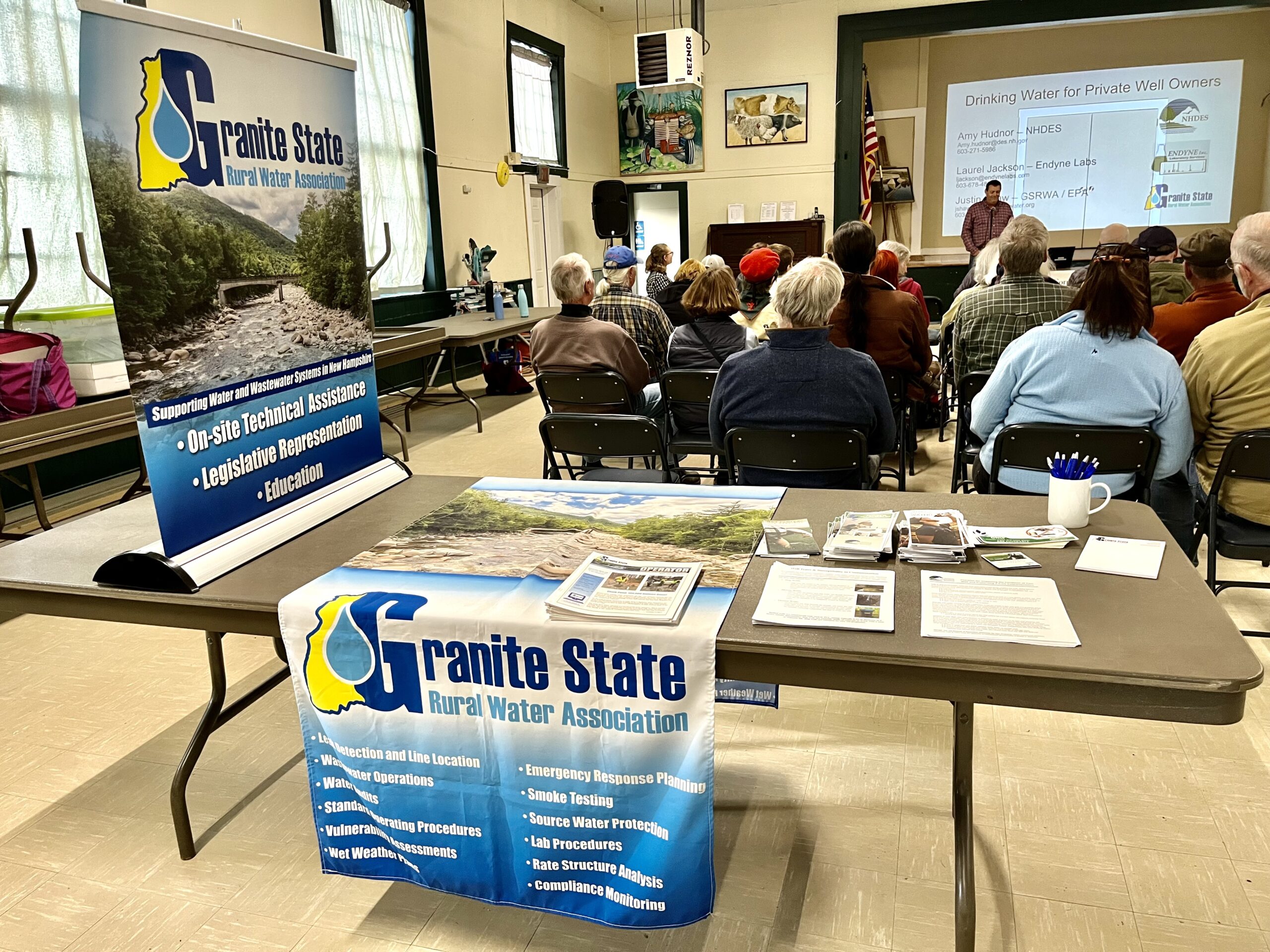
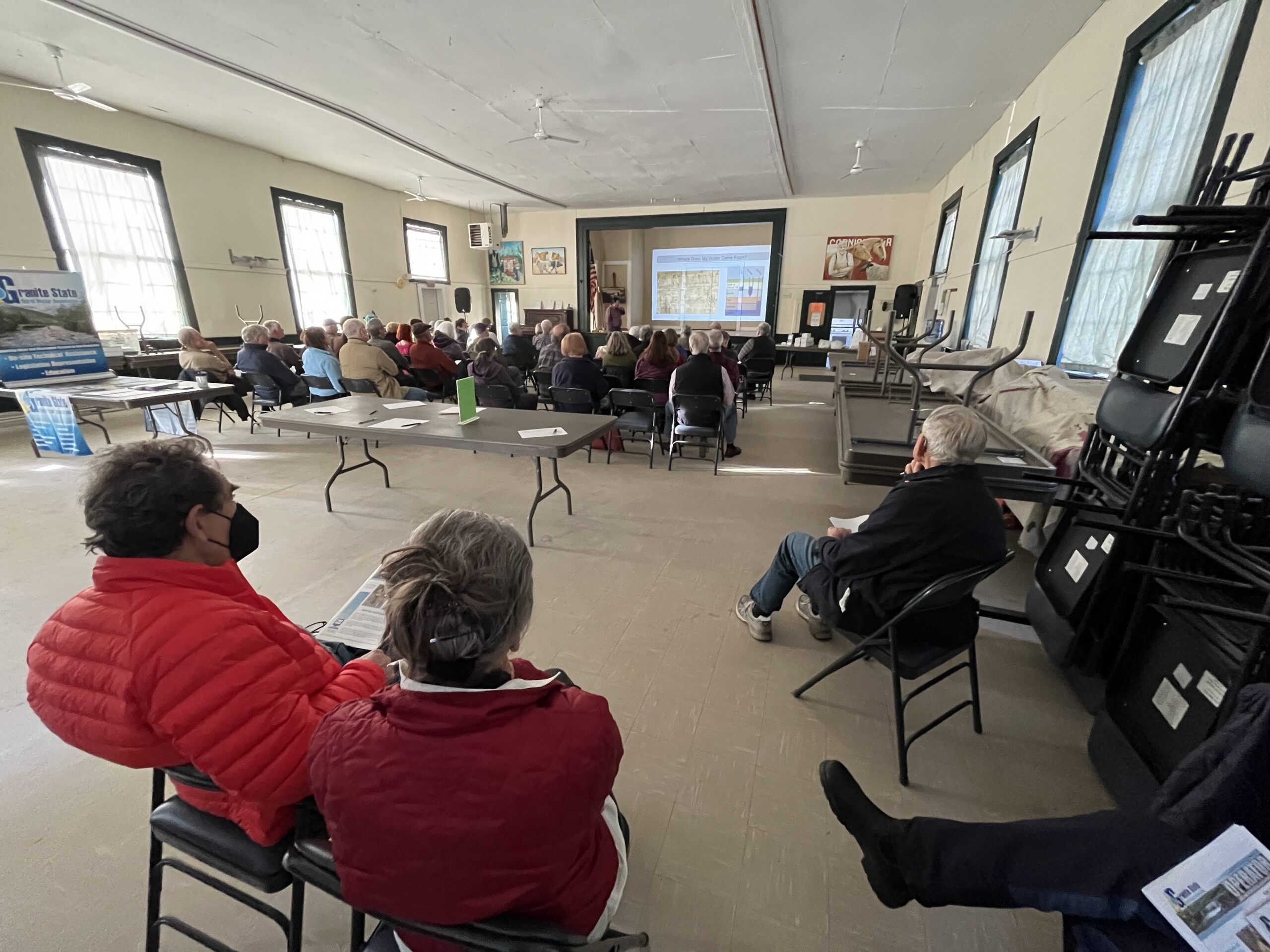
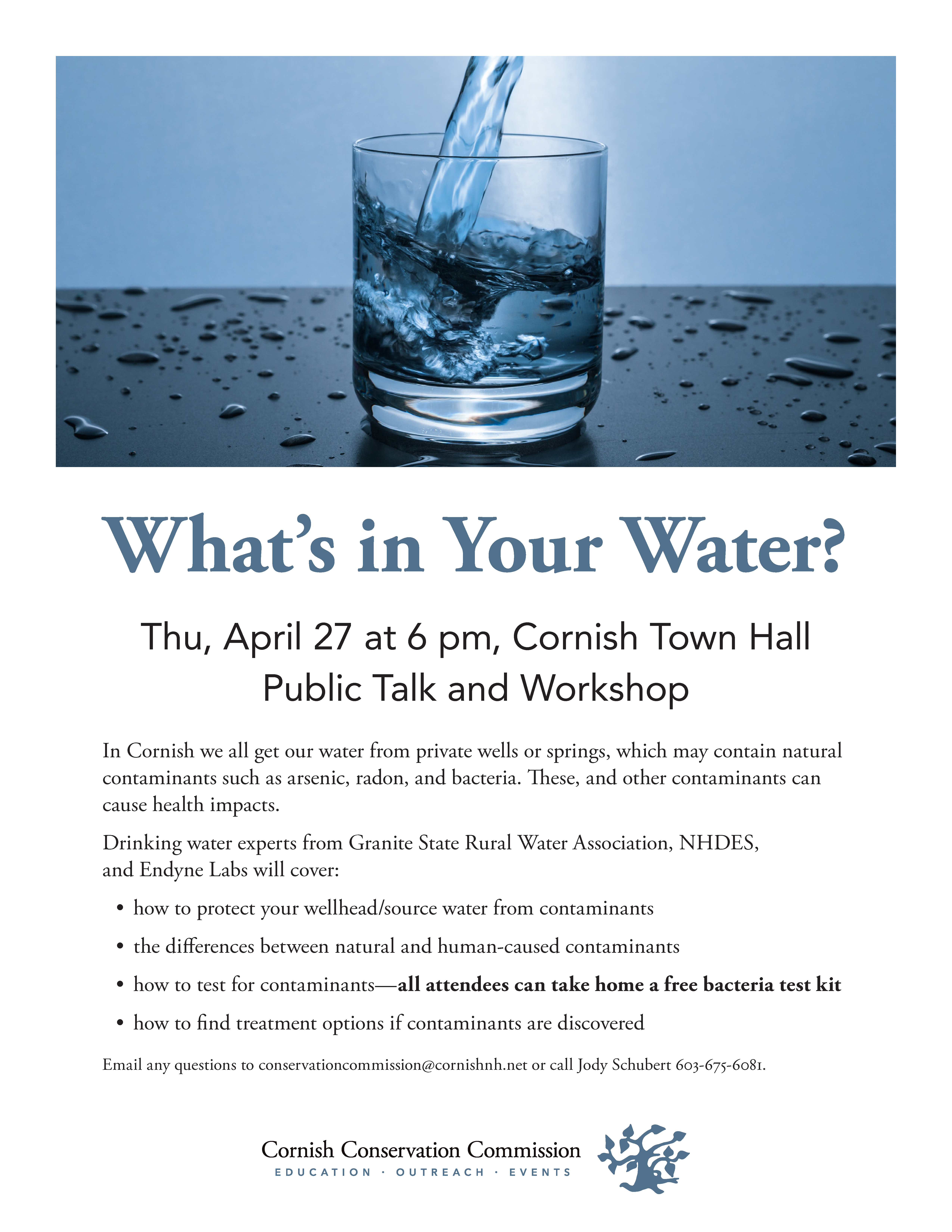
The Cornish Conservation Commission hosted a public educational event for residents to learn about best practices to keep homeowner wellheads (drilled and dug wells) free from contaminants and providing safe and healthy drinking water.

Justin Shaw from Granite State Rural Water Association offered several simple and commonsense takeaways: keep the area around wellheads free of pesticides, fertilizers, gas, oil, other hazardous material spills, animal waste, runoff from snowmelt/rain. Also don’t dump hazardous materials down the sink, pump your septic system on a regular schedule. If you have a drilled well be sure you have a sanitary cap to seal it, that the above ground pipe is in good condition and the cap or top of the well is 8” above the ground surface. Good housekeeping is much easier and cheaper than drilling a new well!

Information about contaminants was shared by Amy Hudinor from NHDES. The source of contaminants can be from pollutants such as PFAS, MtBE and Sodium (from salting roads), or plumbing (lead and copper) or naturally occurring contaminants (arsenic, uranium, radon, and bacteria). 

The recommendation is to test your water every 3-5 years, situations can change and contaminants can move through the soil. Three types of water test kits were supplied by Endyne Labs, and Laurel Jackson provided detailed information about the available tests and also provided a free, or discounted test kit to any attendee interested in testing their water. Once test results are received, residents plug their results into the NH Be Well Informed website to determine if any water treatment is necessary.

Approximately 50 residents attended the workshop, and for those who could not attend or those who want to review the information again, please click the link to view the PowerPoint presentation as offered by our speakers.

The CCC is pleased to bring important educational events such as this to Cornish residents and will continue to focus on the importance of protecting our water resources through land conservation, protection of all of the town’s natural resources as well as offering fun and educational events.

Wild About Cornish: Wildlife Tracking and Habitat Field Trip (February 25, 2023)

Conservation Commission Past Events

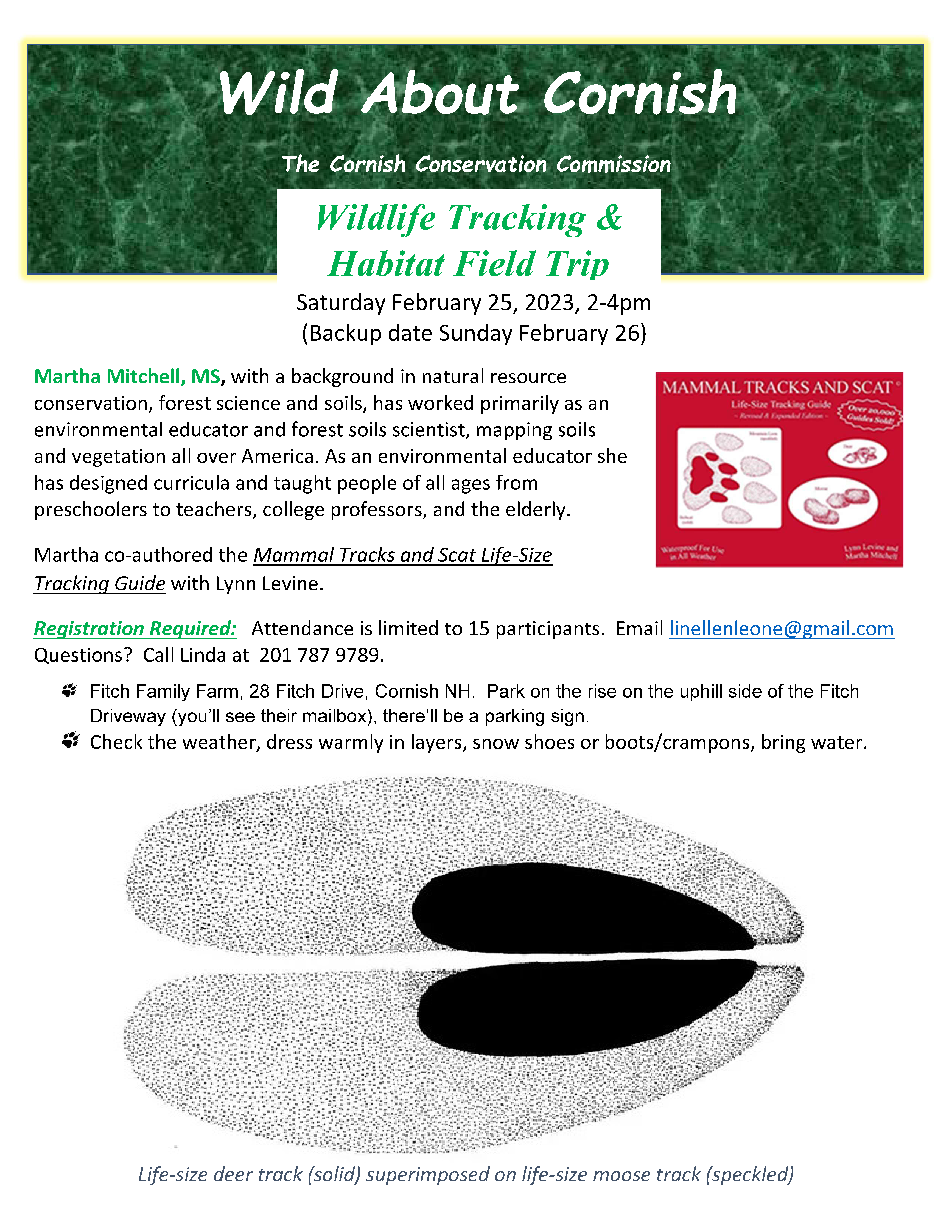
Saturday February 25, 2023, Fitch Family Farm, Dingleton Hill, Cornish NH
13 trackers explored the Fitch Family Farm woods with environmental educator and soil scientist Martha Mitchell. 2 hours later, we’d seen few fresh tracks because non-hibernating animals were hunkered down to conserve energy until the cold and snowy weather cleared.
But during those 2 hours, Martha engaged us with her observations of the winter behavior of foxes, deer and porcupines, how the quality and depth of good soil dictates whether or not a tree produces a tap root, how you can read the scars on tree roots which indicate the movement of the tree’s trunk and root mass during turbulent winds, how important is the water/aquifer recharging system flowing through the forest…and more. We were fascinated.

For more about the walk, read Jody Schubert’s commentary in the CONSERVATION NOTES section, and Mammal Tracks and Scat Life-Size Tracking Guide, co-authored by Lynn Levine and Martha Mitchell.

Wildlife Habitat and Tracking—Fitch Farm (2023 No. 2)

Conservation Commission Notes

On a snowy and COLD Saturday afternoon (2/25/23), 13 intrepid trackers headed into the Fitch Farm woods at the top of Dingleton Hill with environmental educator and soil scientist, Martha Mitchell for the CCC’s first field trip of 2023. For the next two hours, we found ourselves learning about why red pines do not flourish in NH soils (including a short and fascinating lesson on the continental plate tectonics that produced very different soils for NH and VT), that most trees in NH have no tap root, and that tree roots can develop calluses by the perpetual rocking movement from the wind in their crowns (a sudden hard wind coupled with wet soil conditions, and the cumulative stress on roots over time – and down it can go!). 

The day’s cold and snowy conditions meant few tracks were to be seen that afternoon – non-hibernating animals hunker down and conserve energy by waiting for better travel/feeding conditions, but human curiosity and learning were to be found everywhere. February is the season of love for red foxes, look for a romping pair of fox tracks and a possible trampled circle in the snow, evidence of their joy in finding one another. Fresh hemlock branches/twigs on the snow and a trough-like track about 8” wide is evidence that a porcupine is, or was nearby. Their tails drag in deep snow, often covering the prints and making a perfect half pipe trail. Barred owls are already feeding their young owlets, and bear cubs have been born during their mother’s hibernation. Shredded bark/wood on the snow at the base of a tree signals a pileated woodpecker has been busy excavating insects with its massive bill. 

Martha reminded us of the importance of land conservation, not only for the animals we love to observe in their natural habitat, and for tree and plant diversity, but also for the water/aquifer recharging that a protected forest with its seeps, pools, and streams can offer us, and those with whom we share the landscape. 

Join us on future field trips, a great time and much learning is guaranteed! Keep your eye on Connect Cornish for details on our Wetlands exploration in mid-April. Thank you to the Fitch family for hosting this Conservation Commission event, and to Martha Mitchell for sharing her deep understanding of the forest and its inhabitants. Find her tracking guide, co-authored with Lynn Levine, Mammal Tracks and Scat Life-Size Tracking Guide (published by heartwood press), available on-line.