
Conservation Commission Past Events
Presentation by Dode Gladders, Sullivan County Extension Forester / UNH Cooperative Extension
Twenty-nine people gathered on a warm summer evening to learn more about the current and future health of our forests. Dode Gladders, Sullivan (and also Cheshire) County Forester for the UNH Extension Program, specializes in forest health. He identified 20 significant insect pests and diseases that impact the forests of Cornish and beyond. With a good measure of seriousness and some occasional, and much-needed levity, Dode provided important details regarding some well-known pests (emerald ash borer, beech bark disease, Dutch elm disease) as well as some lesser-known harmful pathogens.
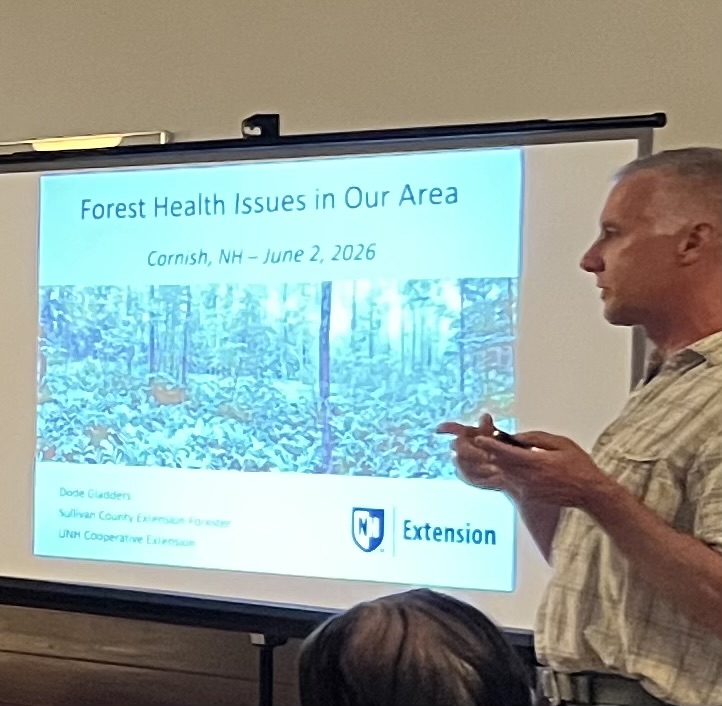
A healthy forest is a resilient forest, and resiliency is high when there is a diversity of trees and shrubs (species, size and age), and a variety of animal habitats. Currently 83% of NH is forested and 85% of Sullivan County. However, most of our forests are very homogenous, about 100 years old and trees are 90 feet tall. The land management practice of keeping or creating open patches to increase species and habitat diversity or controlling or removing invasives and/or hiring a forester to evaluate and assist with forest management can be helpful to increasing forest resiliency.
Significant fluctuating temperatures, invasive pests and diseases, and lack of water are primary stressors, drought being one of the highest stressors to a healthy tree and forest. Most of the insects and diseases in our NH forests co-evolved with the current tree species, and they tend to attack or kill trees that are already sick or in marginal growing conditions. But introduced insects like emerald ash-borer, beech bark/lead disease, or the hemlock woolly adelgid can wipe out an entire species. According to Dode, the evidence strongly indicates that NH will lose close to 100% of its large ash trees and a substantial percentage of its beech trees over the next 5 to 15 years.
Native pests can also take advantage of declining ash and beech trees. It is possible to save some ash trees by chemical injection, but this is very expensive and needs to be repeated regularly. Fortunately, hemlock are not facing this sort of impact in the Cornish area because our cold winters generally kill most the hemlock woolly adelgid population.
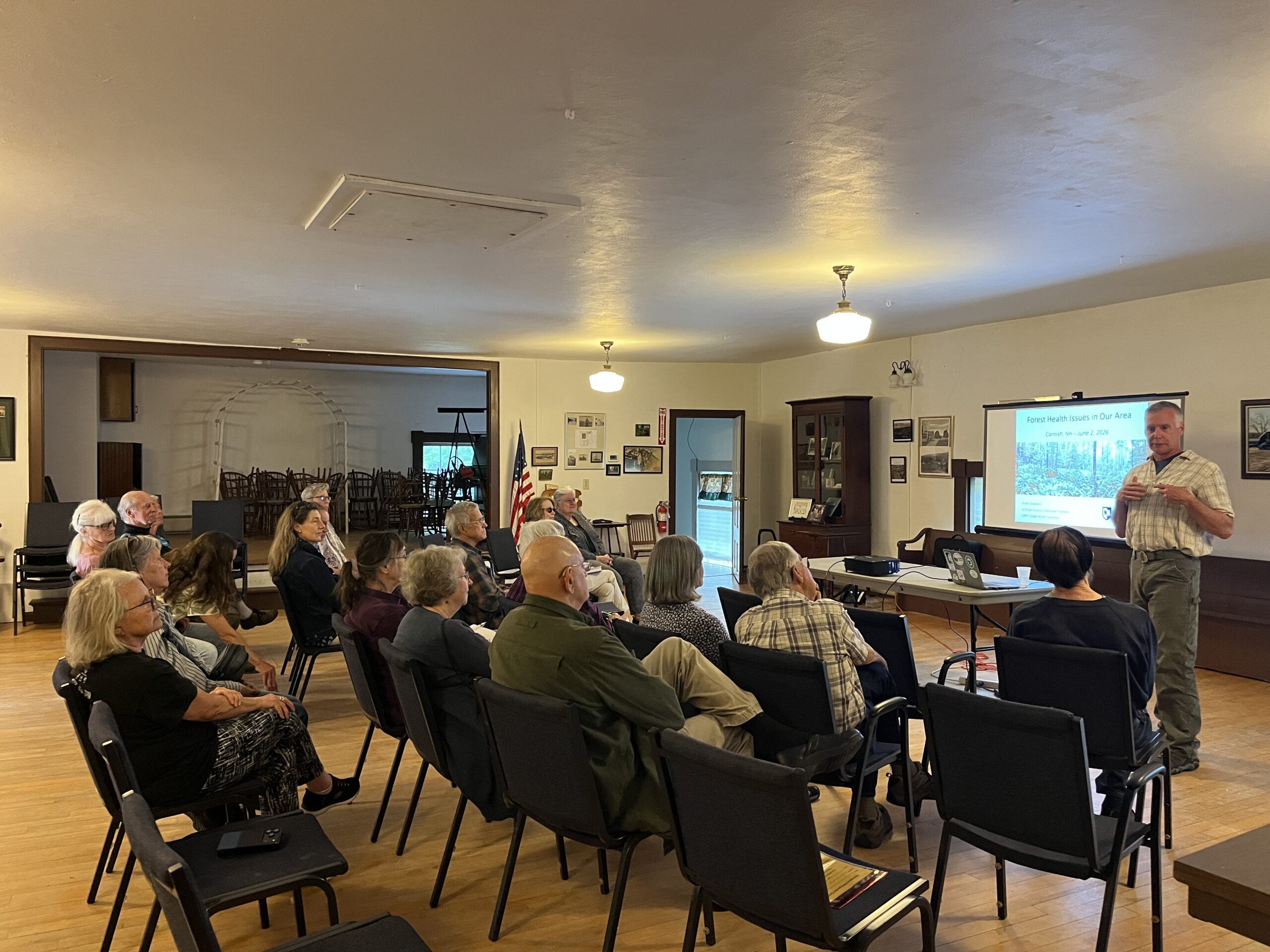
Assisted migration (planting trees that may do well as the climate warms), development of biological defenses against invasive insects and diseases, and development of new resistant varieties of trees (elm, chestnut for example) are also part of the future for resilient forests.
There are 10 county foresters, but only seven positions are currently filled. They are busy, understaffed, and underfunded. But if you live in Sullivan County (or Cheshire) you can call or email Dode if you have questions about managing your woodlot, forest, specific trees, or diseases. There is no charge for his visit or call, but for a more in-depth evaluation or action, or management needs, he can offer a list of service providers for hire. Dode also recommended a publication, Increasing Forest Resiliency for an Uncertain Future by Paul Catanzaro (UMass), Anthony D’Amato (UVM), and Emily Silver Huff (USDA Forest Service).
The Commission is very grateful for the expertise and availability of the UNH Extension Service staff to our community.